Bevet Breizh (Long Live Brittany)
I have been disobliging about French beer before. It is true that it does not bear comparison, in terms of a nation as a whole, to the product of its German and Belgian neighbours. You don’t go to France for the purpose of drinking beer. You go for the wine – which is a whole other story that I am not qualified to tell – and in Brittany and Normandy you major on cider and other apple-based alcoholic drinks.
However, in certain parts of France, when you seek out the local beer (as you always should, wherever you are), you may be pleasantly surprised and perfectly satisfied.
I recently spent a week with my family in Roscoff, best known as a ferry port at the top of the Finisterre Peninsula. Quick digression: Roscoff is the home of the famous Roscoff onion. By extension, it is the home of the legendary “Johnnies”– onion sellers who spent the autumn and winter in Britain, becoming a popular fixture and in the process creating the stereotypical image of the Frenchman which has endured to this day. I heartily recommend the museum celebrating the “Johnnies“ for a short visit. The highlight was the video interviewing ageing former Johnnies, recalling the heyday which lasted until World War II and then declined slowly. When Brittany Ferries sent their first boat to Plymouth in 1973, it was full of onions. Less romantic but very efficient.
Undertaking some brief research about local beer before setting out, I discovered that Brittany has a thriving microbrewery tradition. The logical place to start was the brewery of Roscoff itself –Kerav’ale. On checking into my accommodation after a long and sweaty journey, I thought that a local blonde beer would go down very well. I found a bottle of the local Rosko blonde in the supermarket and it was really very good. Beer is often about the moment in which you consume it, and this was a very auspicious moment to be drinking a beer, but the underlying quality was undeniable.
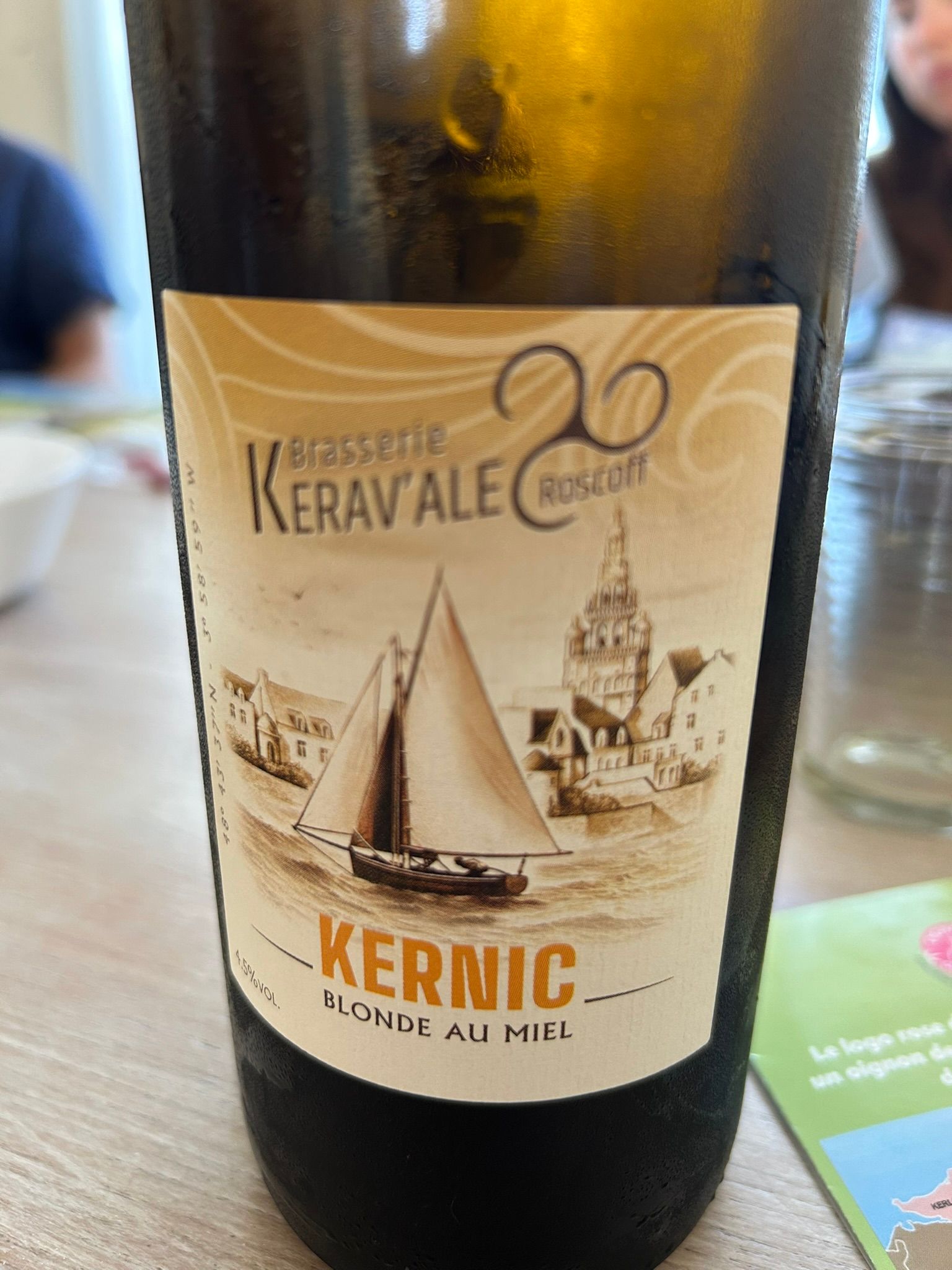
I noticed that the actual brewery was only a very short drive down the road, so I decided to pay a visit and see what was on offer. There were some intriguing concoctions which I would mildly praise as pretty good – the beer made with a flavour of onion (yes I know, but in Roscoff it would have been remiss not to try the onion beer) and the beer infused with wild peppers from Madagascar. They offered a “blonde au miel“, which bears favourable comparison to the honey blonde produced by Hiver in Bermondsey. The star prize, however, bestowed itself unexpectedly. They were selling a bottle of “Best Bitter“. I eventually decided towards the end of the week that it was worth a try, and I was knocked out. 6%, dark and rich. Not remotely my idea of a best bitter – more like a Dubbel - but utterly delicious.
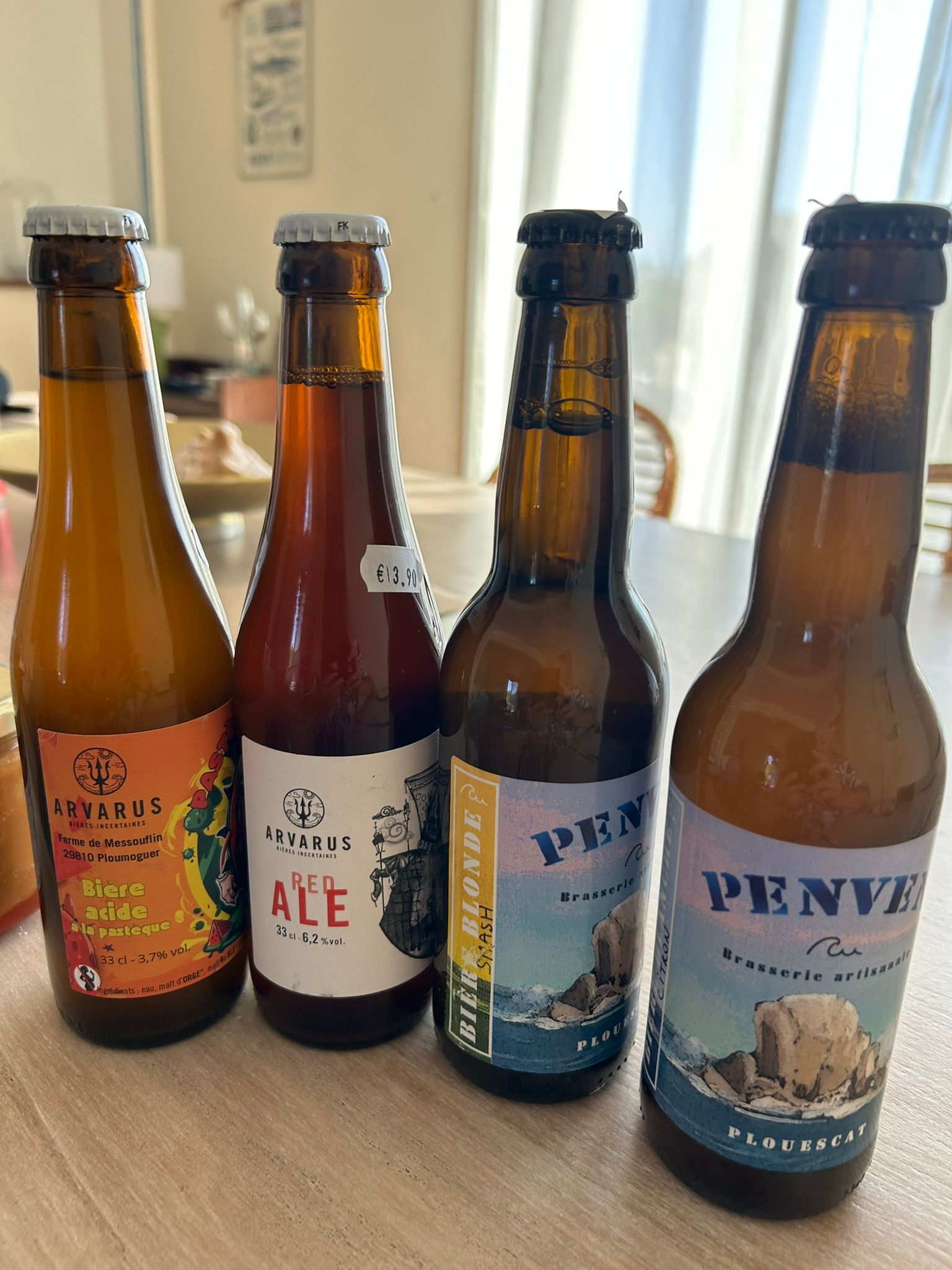
My next stop was the weekly Roscoff Market, where I sought out the beer talent that was an offer. I picked up a couple of bottles from Penven brewery from neighbouring Plouescat, but one of the hazards of holidaying with a group of young people is that they occasionally drink your beer before you do, so I never got to try these. I interrogated the culprits about tasting notes, and was given to understand that they were nice but nothing that really stood out.
I was quicker off the mark with a couple of beers from Arvarus brewery, located down in the south-west of Brittany near Quimper. There was one beer which styled itself “Acid Watermelon“, with a picture of an anthropomorphic angry watermelon on the label - although actually it was more on the refreshing side with a slight tang, and at 3.7% very drinkable. They also had a 6% red ale, which was absolutely delicious. Basically Arvarus wins my prize for sheer Breton beer craftsmanship. Incidentally, they proudly promoted their “Anglo-Saxon” inspiration for their beers, which at first sight seems odd in France (or indeed in Celtic Brittany) but there you go.
During a visit to the nearby town of Morlaix, I enjoyed a classic hoppy IPA called Dremmwel from the Brasserie de Bretagne - again, on the southern coast.
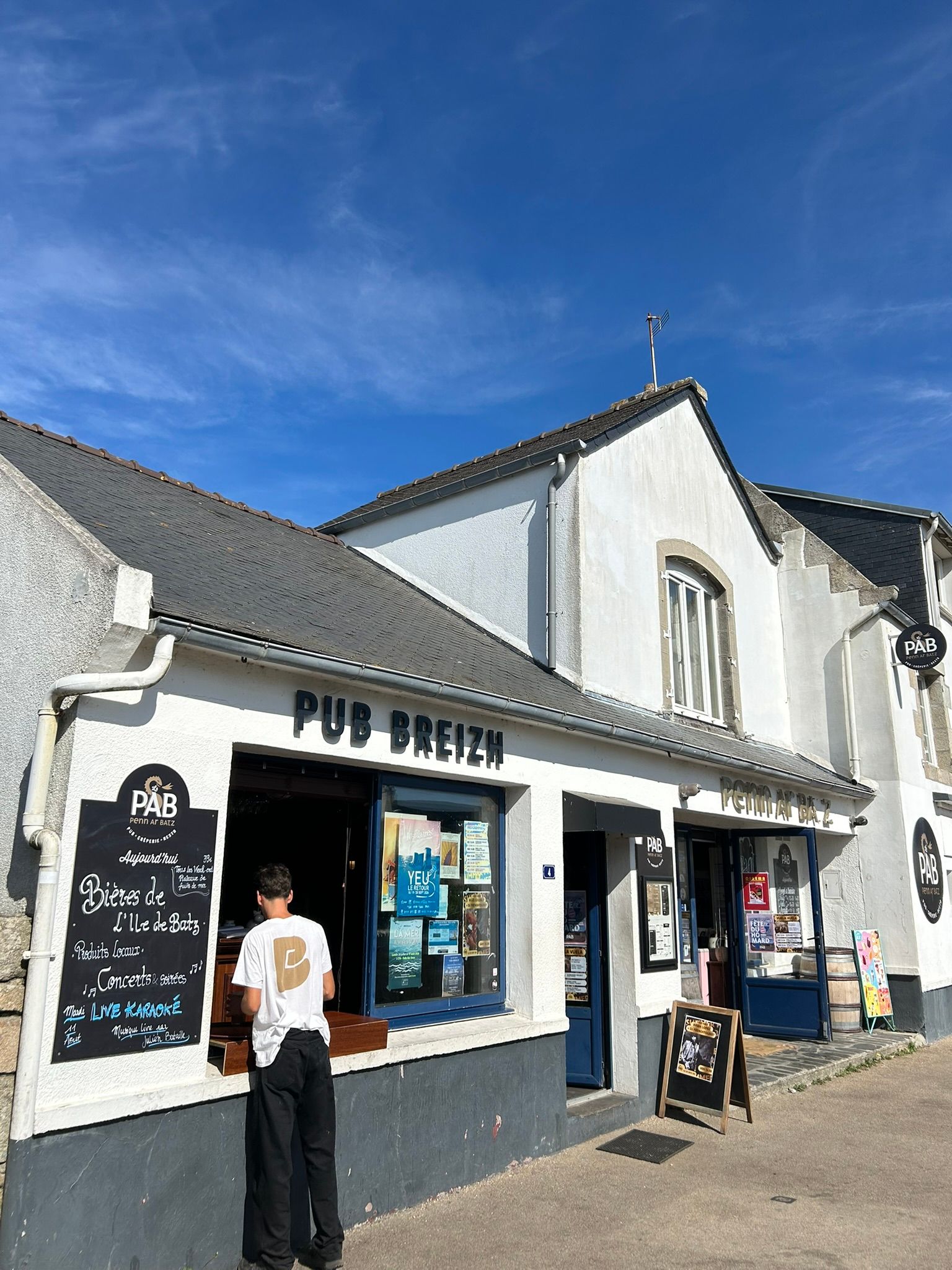
My final beer experience came when we took the boat over to little Ile de Batz, 15 minutes sailing from Roscoff. This is a lovely small atmospheric island with no cars but some great scenery and beaches. It also has a microbrewery - PAB - of course it does. We settled at PAB’s pub and between us worked through their range. I initially had their Pils, which was a bit meh. Much better received were the Peach and Rhubarb Gose [Footnote 1] and the Dragon Island NEIPA, which bore the signs of someone actually knowing what a NEIPA is and how to make one - beautiful rich colour and well handled hops.
So I have learned not to sneer at French beer. I still don’t rate some of the larger scale names (e.g. Goudale), and there was rather too much Affligem (Heineken’s attempt to mimic a Belgian Abbery beer) around for my liking. But the micros were good. It was a bit odd to be in France drinking at breweries that proudly preclaim themselves British-inspired, but actually rather nice. And it was a great holiday.
Footnote 1
Gose is of course unrelated to Geuze. See https://www.londonbiermeister.co.uk/blog/teur-de-geuze-2026 and https://www.londonbiermeister.co.uk/blog/why-there-is-more-to-german-beer-than-reinheit
Full list of beers consumed
Kerav’ale
Rosko blond, blond au miel, a l’oignon, au poivre sauvage , ble noir, best bitter ((6%)
Penven
Blanche au citron, Blonde Smash
Arvarus
Acide à la pasteque, Red ale
BRO
Hip Hoppity IPA
PAB
Pils, NEIPA, Peach and Rhubarb gose
Brasserie de Bretagne
Dremmwel IPA