Toer de Geuze 2026
If you love beer, then you have to try Geuze (see Footnote 1). I would say try it once but actually you probably need to try it twice, the second time after you have recovered from the shock of trying it the first time. You may find it reminds you less of beer and more of a sour cider or champagne. Some people would deploy less flattering comparisons. But I love it, and find it the perfect accompaniment to a hot summer day
I first wrote about the origins of geuze a while back - see
https://www.londonbiermeister.co.uk/blog/thank-heaven-for-a-little-gueuze-the-joys-of-spontaneous-fermentation (plus Footnote 2)
I don’t go to Belgium as much as I would like. So, at the last couple of Great British Beer Festivals, geuze has been on my tick list and I have duly headed to the international bar to enjoy one. In 2025 (see https://www.londonbiermeister.co.uk/blog/we-see-through-a-cask-darkly-gbbf-2025 ) I got into conversation with the excellent guy behind the bar. He told me about the Toer de Geuze - a biennial (i.e. every two years) event at which all of the main geuze blenderies are open for business over a weekend. He actually recommended a particular organised tour, but I am not an organised tour kind of person - so I went for it and booked my own travel and accommodation. After a lot of anticipation the calendar finally ticked round to the right place and, on the morning of 8 May 2026, I boarded the Eurostar.
I have also captured my weekend in a video on my YouTube channel! https://www.youtube.com/watch?v=SXmcNZoKl60
Introduction to HORAL and the Geuze Community
Geuze is an ancient staple of Belgian brewing [Thanks to Beer Nut for correcting me in the comment below - lambic is but geuze isn't]. However, during the latter half of the 20th century it was dying out as a serious proposition. I see a few parallels here with the fate of cask ale in the UK.
By the 1970s, the market was being dominated by big players with little care for tradition who were using the words “lambic” and “geuze” for inferior products. Then there came the fightback. So let us now praise some great men.
In 1978, the Brussels Geuze Museum was founded by Jean-Pierre Van Roy, husband of Claude Cantillon whose family had been brewing since the beginning of the century. A brewery and museum has operated at this site ever since, and it has become a symbol of the fight for purity and high standards in lambic production.
Also in 1978, a young blender called Frank Boon took over an existing brewery called De Vits to form the brewery that bears his name. In 1986 he started to build a new brewhouse in Lembeek and, in 1990, it produced its first geuze. This was “one of the key moments that earned Frank Boon his nickname as the saviour of geuze”, reports the impeccably unbiased source that is the Boon website.
Then we meet Armand Debelder, son of the owner of a Beersel restaurant called the “3 Fonteinen”. Armand was strongly influenced by a Flemish cultural movement which operated out of his father’s bar, and one of the things they were passionate about was traditional Flemish beer. So, by the time we reached the 1990s, he was ignoring his father’s warning that geuze was a relic of a bygone era and winning awards for his blending.
In January 1997, Armand brought the key individuals together to form the High Council of Artisan Lambic Beers (HORAL). Founder members were 3 Fonteninen, Boon, De Cam, De Troch, Lindemans and Timmermans. Together with Armand and Frank, one of the leading lights in HORAL was Willem van Herreweghen, who left a job at Palm to form De Cam. One of HORAL’s first initiatives was to organise the first Toer de Geuze later that year. Shortly after, Armand moved production to Lot where it remains now.
Cantillon, from the beginning, stood aloof. The flip side of the great respect in which they were held was just a slight reputation for being purist and other-wordly, wanting to stop the clock in 1978.
So, without Cantillon, HORAL was an entirely Flemish affair. It remains largely so. Although, in 2009, a former employee of 3 Fonteinen and Cantillon set up his own blendery in Enghien, a mere 200 metres across the “border” in Wallonia. His name was Pierre Tilquin.
The essence of geuze is that it involves blending, which in turn means collaboration between the breweries to find the perfect combination of lambics. The key players worked closely together. Amazingly enough, though, a group of men so passionate about beer did not always agree with each other. This culminated in the Great Schism of 2018, when 3 Fonteinen (after Armand’s death) withdrew from HORAL and hence from the Toer, citing irreconcilable artistic differences. The gist of the critique was that HORAL had become “fortress Flanders”: too tolerant of bad practice among Flemish producers; too aggressive towards brother brewers elsewhere (e.g. preventing the Texan brewery Jester King from calling their beer “methode geuze”).
Also in 2018 (returning to the subject of wanting to stop the clock in 1978), a Cantillon event featured a “traditional” scantily clad female dancer. Cue the inevitable backlash. Cue the equally inevitable backlash to the backlash.
Thank you for bearing with me on this, dear reader. As an amateur history nerd, I like to understand a bit about the story so far. Otherwise it is just a question of going to a bar and having a beer - pleasant but less interesting. And learning the story kept bringing to my mind the analogies between the stories of Geuze Blenders and of CAMRA.
But anyway, to the beer…
Friday 8 May
Cantillon Brewery and Museum, Brussels: Tour and tasting samples, Magic Lambic, Oude Geuze
3 Fonteinen, Lot: Kriek, Nocturne - lambic with dark malt, Oude Geuze
‘T Parlement bar, Halle: Kestemont Oude Geuze
My Eurostar journey was really smooth so I arrived in Brussels fresh and with a good few hours before I was due to check in. So there was time to check out Cantillon and I figured now was as good a time as any.
I like a bit of history mixed in with my beer and Cantillon is also a museum. I did the tour, which included the opportunity to look into the room where the wild yeast lives. The museum also bigged up the role of Cantillon in the revival of “real” lambic and Geuze (see above). I was given samples to taste after the tour, but I fancied a proper drink. The place was heaving on Friday afternoon as the community flooded into Brussels for the weekend. To get into the bar you had to put your name on the waiting list. It took about 20 minutes for my name to be called - I did the tour in the meantime- and I was ushered up to the one seat that had become free, where I purchased a glass of lambic.
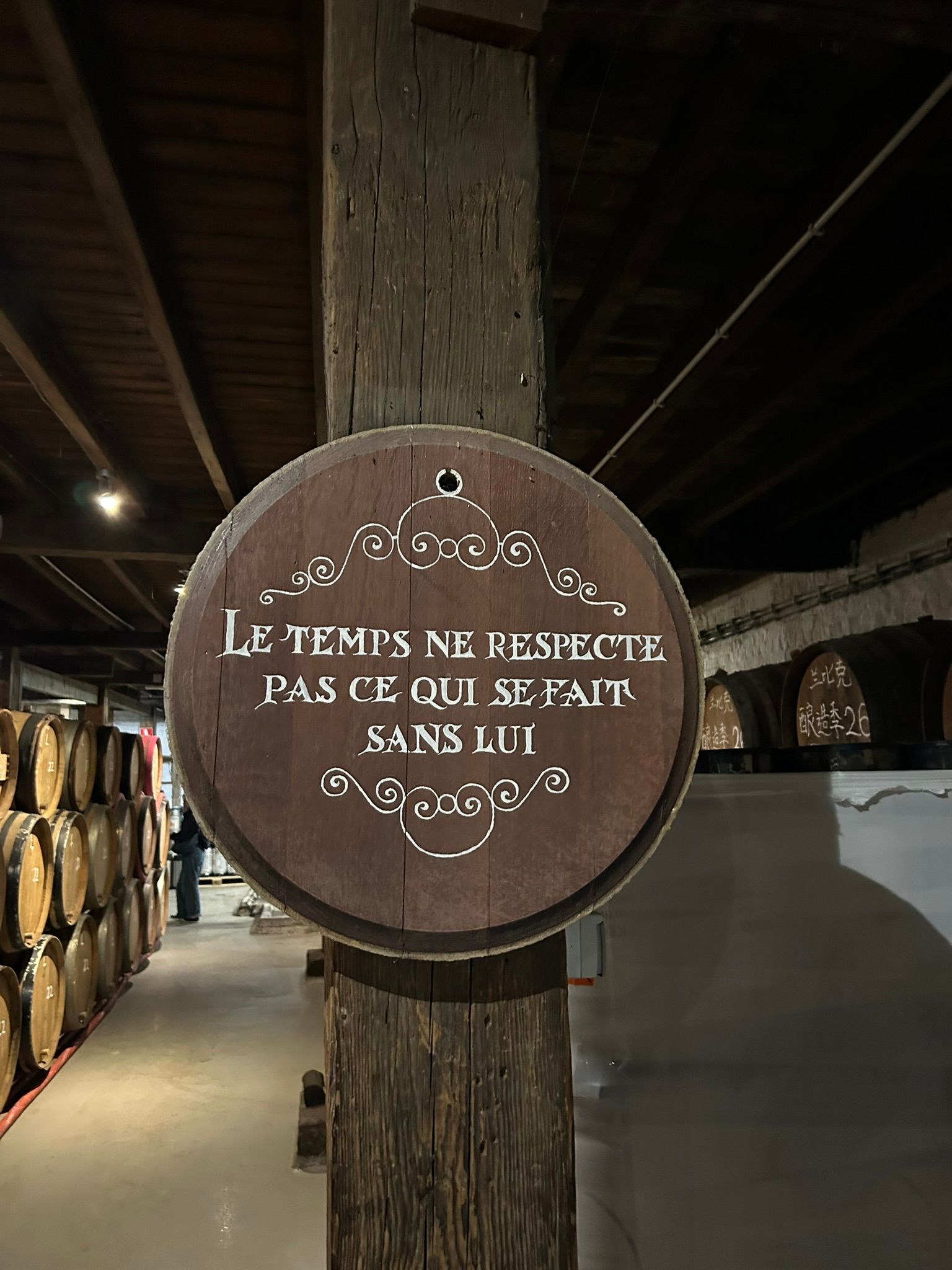
This was my first encounter with the fact that a) some people had travelled a long way to be here and b) those who had were very serious beer people. The people at my table were brewers who had come all the way from Brazil. They kindly offered me a taste from their bottle of 2007 Oude Geuze, which was pretty phenomenal.
I then caught a local train to Lot, halfway between Brussels and Halle, for another key destination on my bucket list. The “Lambik-o-droom” of the 3 Fonteinen brewery. Again, every table was full with groups of friends sharing large bottles of geuze. (I heard quite a few American voices, with a group sporting t-shirts which proclaimed their allegiance to Kentucky). I was knocked out by the sheer length and breadth of the beer list, with infinite varieties and vintages. I could have enjoyed a bottle of 1997 Oud Geuze vintage had I wished to spend EUR 120… as it was, I settled for some more affordable but highly delicious alternatives. The “Nocturne” dark lambic was a fascinating dark / sour combo, and my bottle of basic Oude Geuze was sublime.
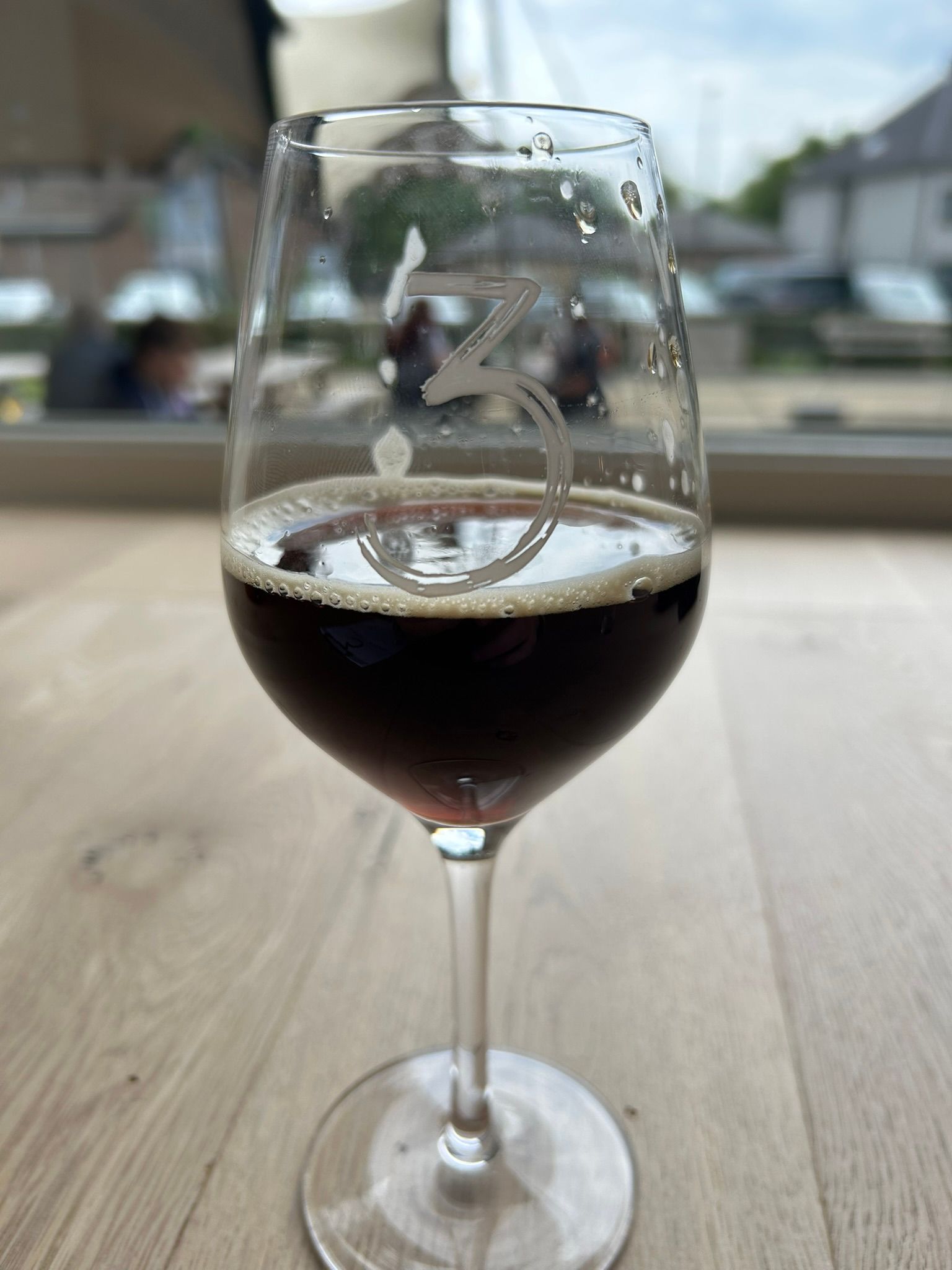
Leaving Lot, I made my way to Halle, gratefully dumped my belongings and sought food and drink. The ‘T Parlement bar, just round the corner from where I was staying, was an excellent recommendation. I had the Kestemont Oude Geuze because I thought (wrongly as it turned out) that I would not be going to Kestemont, while enjoying the quintessential Flemish dish of “bolletjes” (large meatballs) with tartare sauce.
Saturday 9 May
Oud Beersel, Beersel: Framboze, Yuzu Peel infused lambic
Hanssens Artisanaal, Dworp: Cassis, Oude kriek, Megablend, Schaerbeekskriek
Den Herberg, Buizingen: Cuvee deville
Boon, Lembeek: Kriek millesime
‘T Parlement, Halle: Lambiek Fabriek Juicy & Wild Black-belle
I rose, noted with surprise and pleasure that the sun was shining, and headed to Tootoot bike hire to pick up the e-bike that would be my trusty steed for the day. I hit the road with surprising (for me) ease and battled my way up the hill into Beersel for my first visit of the day. After a quick stopover at the beautifully situated Beersel Castle, I headed into town (past the original 3 Fonteinen Restaurant) to Oud Beersel.
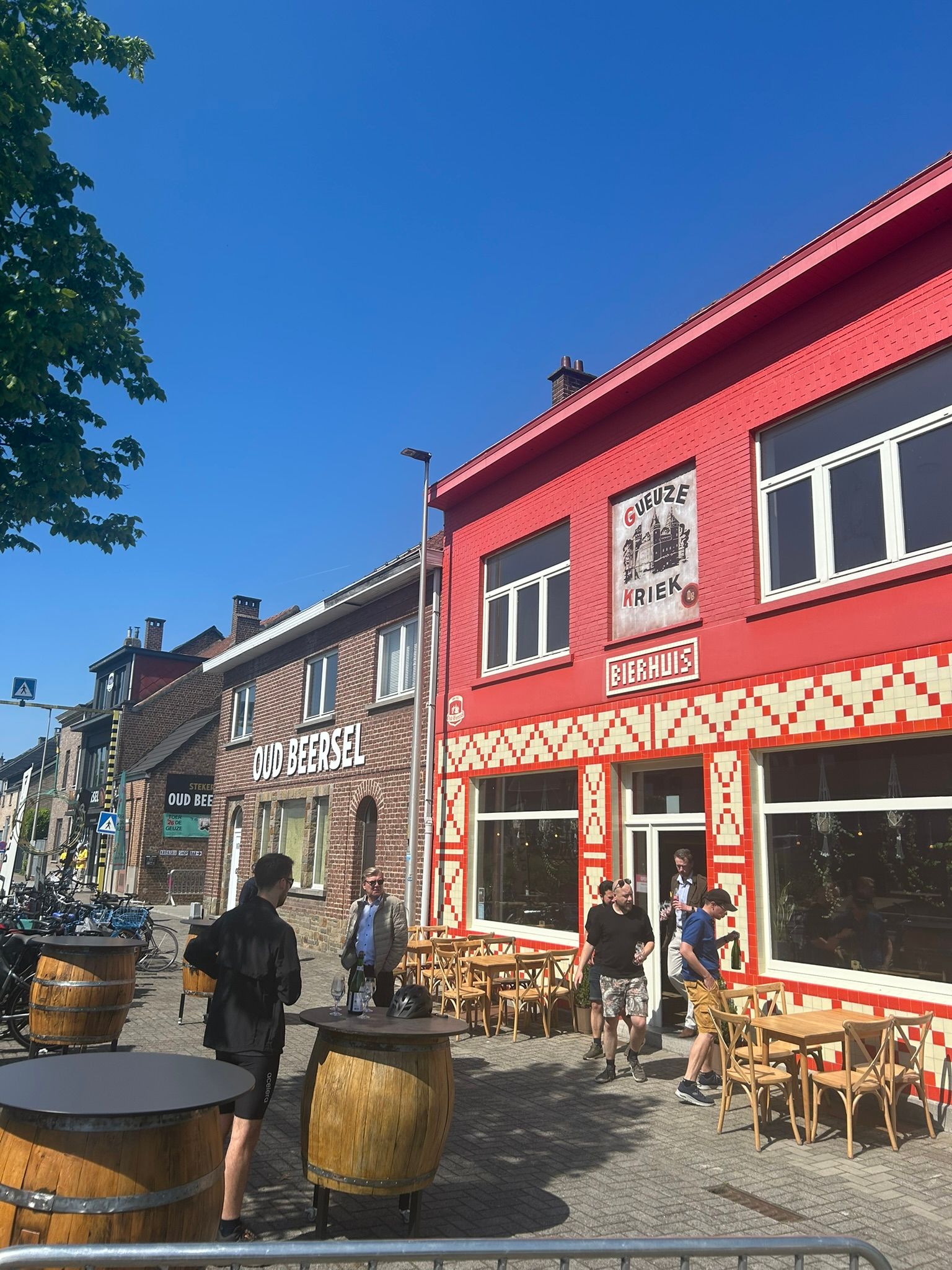
Each of the Toer venues had its own vibe. Oud Beersel was the small town bar in a very pretty old building on the high street. This was just after noon and the tables out front and back were already full, with locals wondering what that big yellow thing in the sky was. There were bikes a-plenty. I could see a couple of record decks preparing for action later. In terms of beer, my first choice was not my best - a slightly mundane and overly sweet Framboze. But they did a nice line in funky lambics on tap, and I was intrigued by the yuzu peel infused offering.
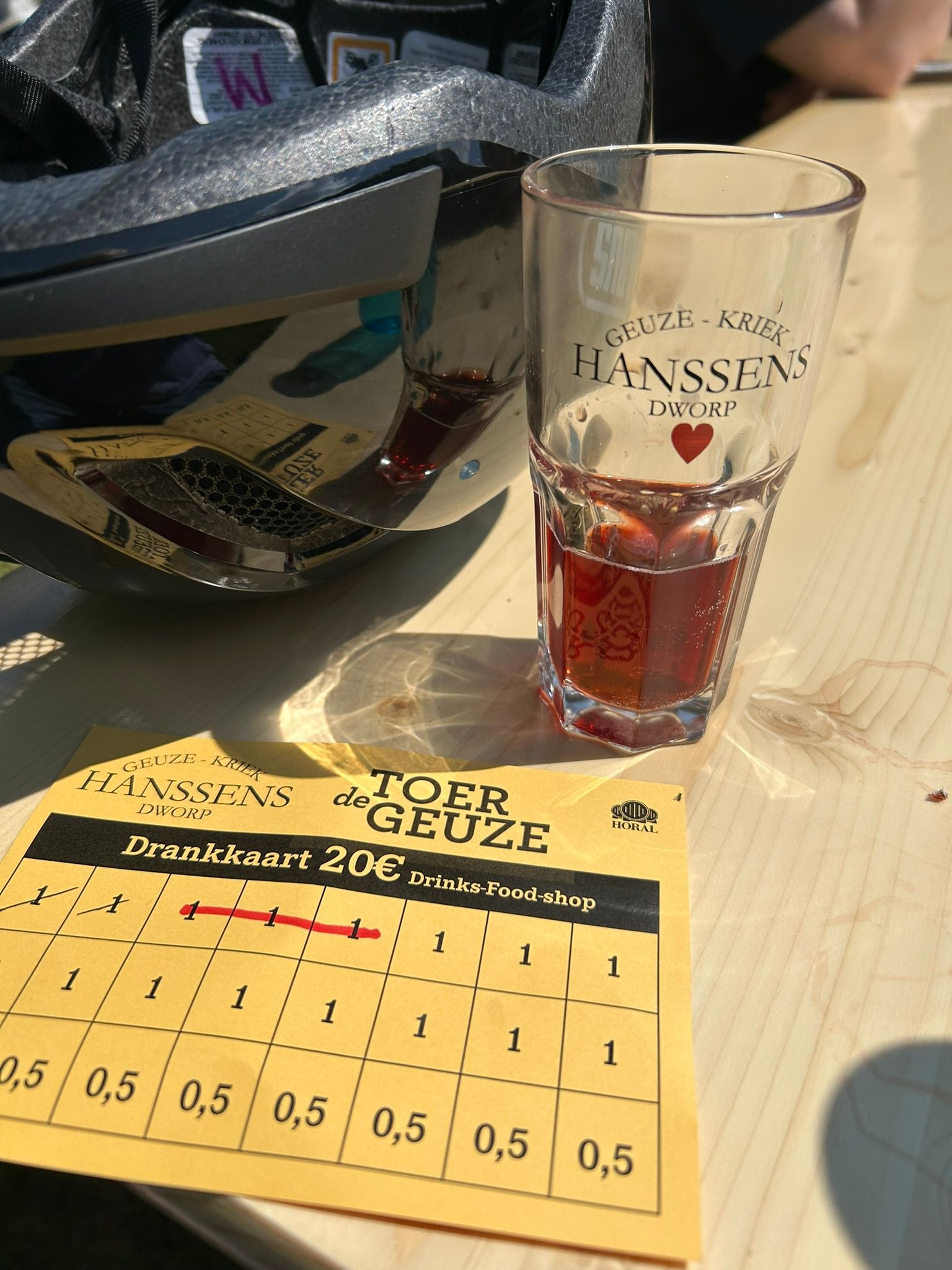
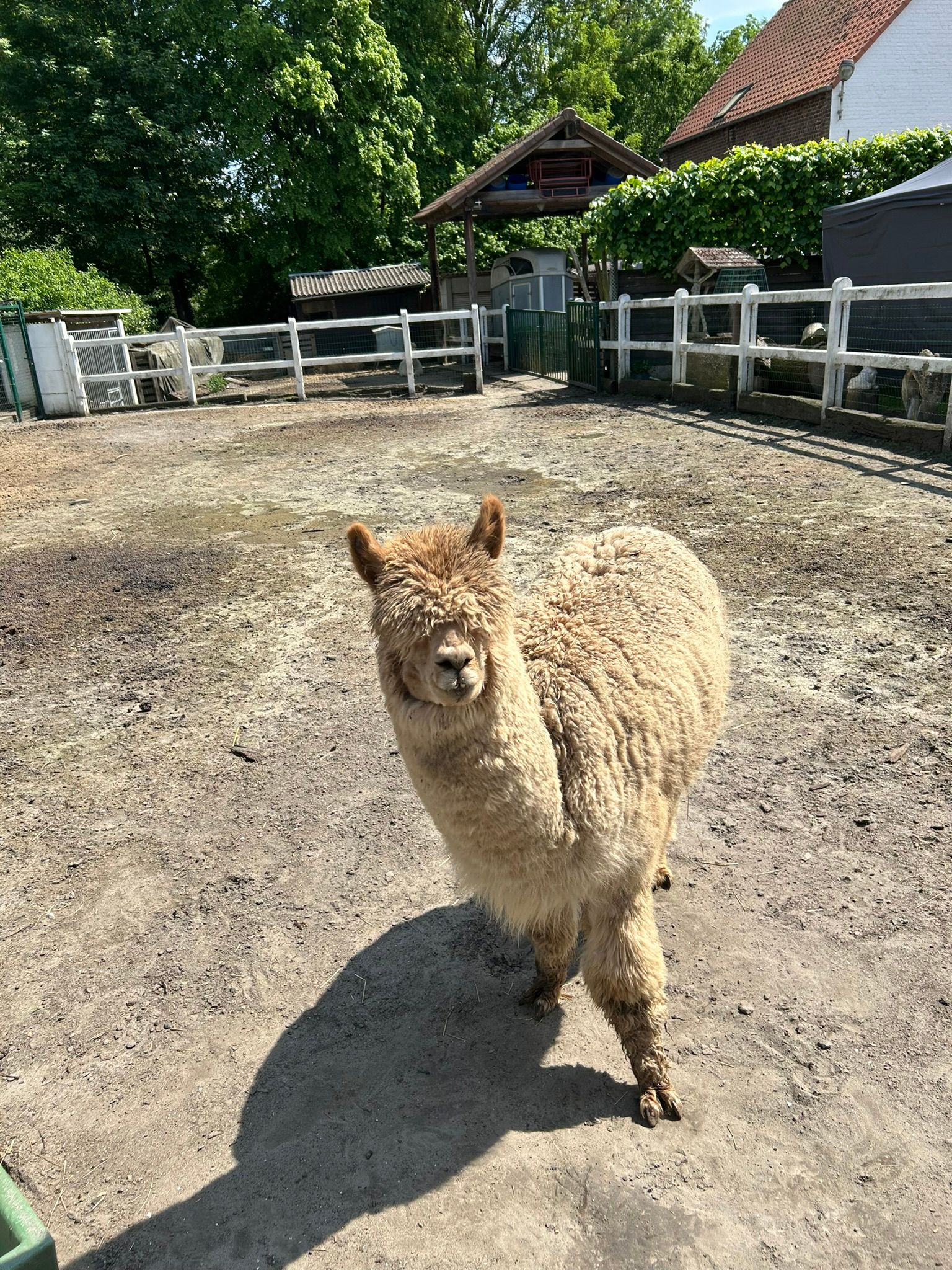
Next stop was the village of Dworp and Hanssens Artisanaal, which was one of my favourites of the whole weekend. Partly because it was a beautiful rustic setting, complete with a very engaging alpaca in the farmyard. Partly because they were selling their full range of geuze by the glass (for only EUR 3 a shot!) without making you buy a bottle. I was therefore able to have fun experimenting with the full range. The Oude Kriek really hit the spot (in a good way) in terms of acidity and I was able to contrast it with the Schaerbeekse Kriek (one uplifting aspect of the geuze story is how the small and bitter locally produced Schaerbeek cherries - not ideal for eating - have proved perfect for kriek production).
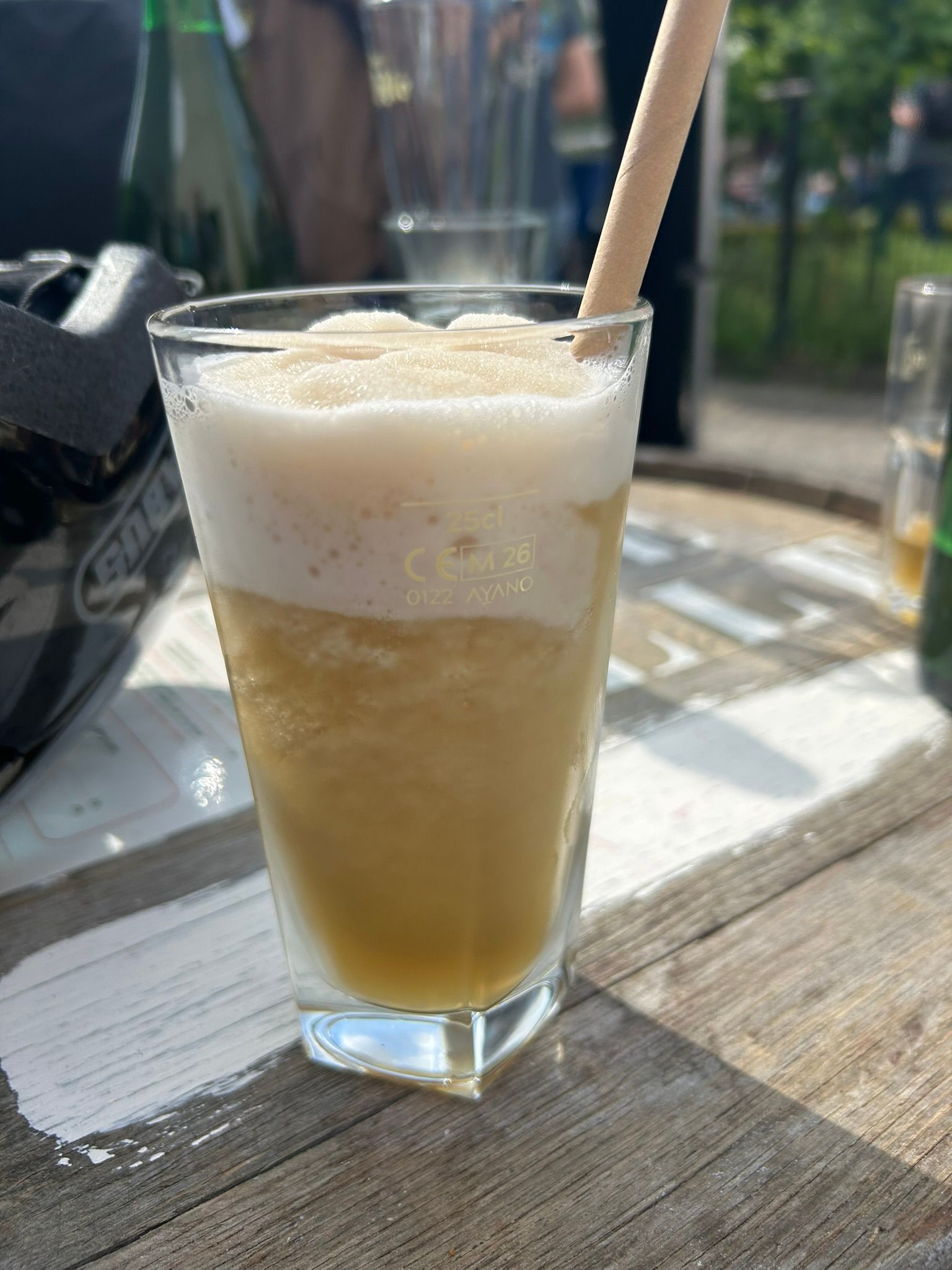
Den Herberg was another charming small town venue, with the brewery commandeering an entire side street to set up tables. I went with a popular choice of the locals, which was the brettanomyces heavy mixed fermentation Cuvee Deville, named after the brewing family. (You probably know whether you like “brett” or not. I do, when it is handled by someone who knows how.) I also decided I had to try the Lambic Slushy, and it was an absolutely delicious dessert. Den Herberg was full of families having a great time, which is always something I see as a positive.
Finally for the day, I made my way down to Lembeek for Boon, which was on a different scale altogether. I arrived at the same time as a marching band making its way into the vast courtyard, where hundreds of people were enjoying themselves in noisy fashion. Maybe I was tired having been on my bike in the sun all day; maybe just this kind of place is not my scene. Anyway, I had a kriek, quite enjoyed it, and headed back to Halle.
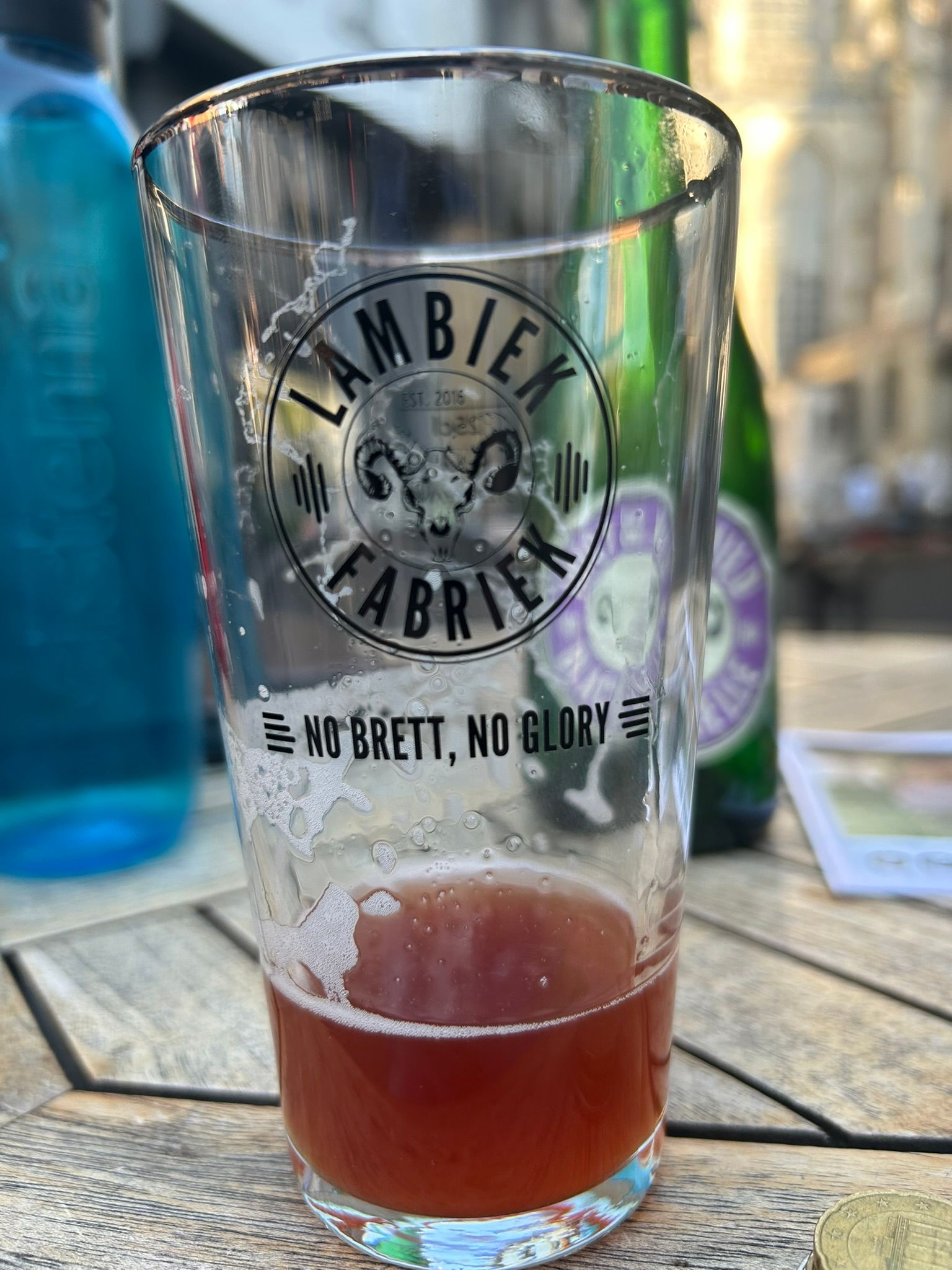
I realised that I had one more beer in me, so once again strolled round to ‘T Parlement. Once again I went for a geuze from a brewery that I was not going to visit. So this time Lambiek Fabrik, one of the newer and edgier kids on the block. I had their geuze that had been macerated with black berries, and greatly enjoyed the sharpness.
Sunday 10 May
Tilquin, Enghien: Geuze au tilleul (lime wood), Raisin drome au fut, Rullquin vintage, Geuze au miel
De Cam / Boegarden, Gooik: Boegarden Black Kriek
De Troch, Wambeek: Krieken Lambiek, Megablend, Chapeau framboze, Oude Geuze
Lindemans / Kestemont, Sint-Pieters-Leeuw: Kestemont 5 year old lambic, Lindemans Ginger Geuze
On Sunday morning, I had booked one of the many buses plying their trade to a fixed itinerary of four venues. I arrived at Halle Station a bit early to find a mass of beer-loving humanity itching to depart. On a quick scan of the passenger list for my bus, I saw largely Belgians, but some Brits and others (I think Ontario was the furthest flung place of origin). I overheard some Brits from northern England who were clearly brewers from the way that they were talking. (I also heard them refer to Man City as “we” and therefore resisted the temptation to break into a chorus of “North London Forever”). After a slight delay to catch some people whose trains from Brussels had been delayed - an advantage of staying in Halle! - we were on our way.
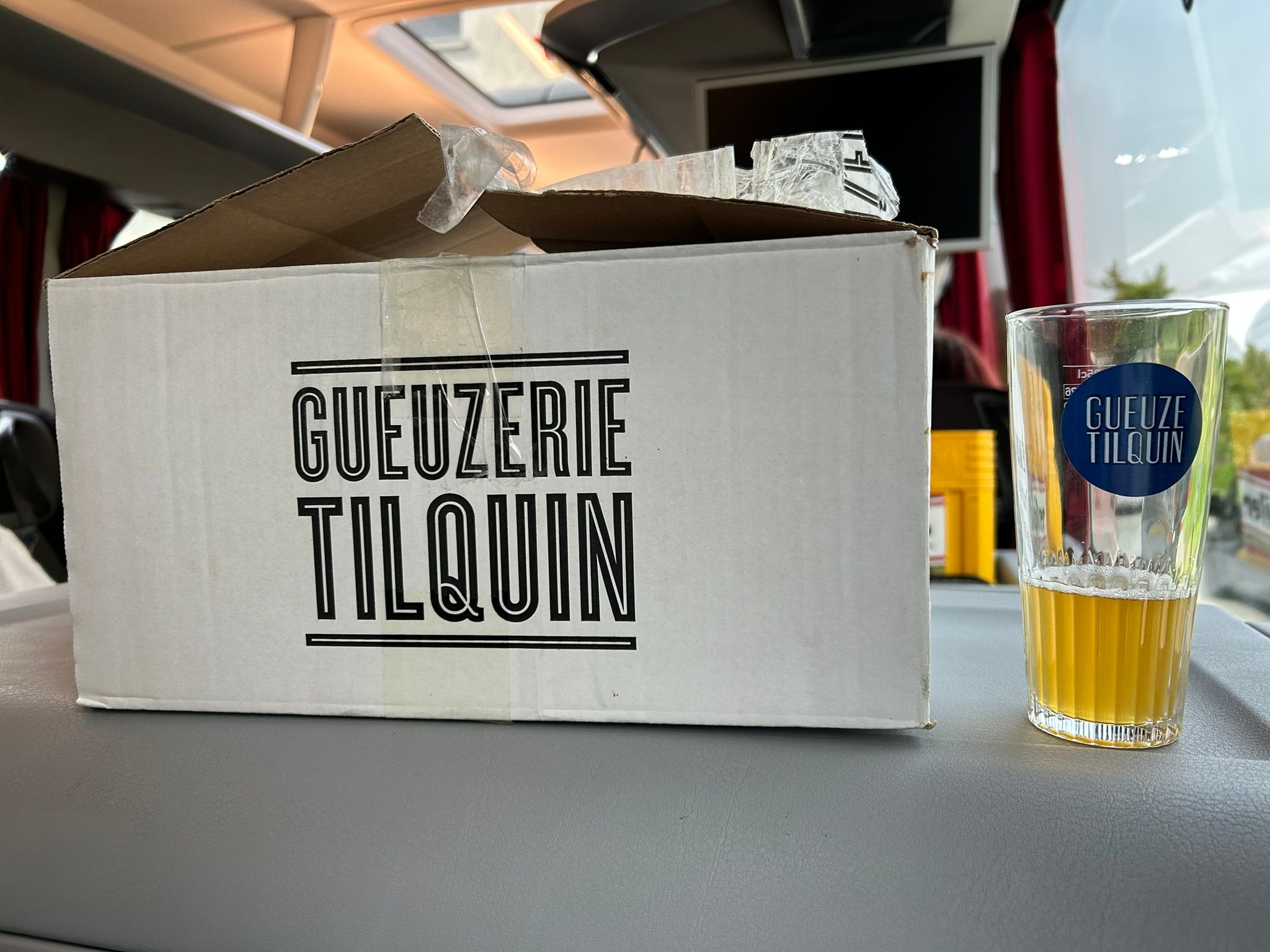
First stop Tilquin, the sole outpost of Wallonia. This was my most eagerly anticipated stop and it did not disappoint. I knew the beer would be amazing, and to my delight they were opening up their bottles to serve geuze by the glass. Each thing that I had (see above - I won’t single anything out except possibly the miel…) was perfectly crafted and balanced. To my disappointment we were only here for 1 hr 15 minutes (compared with 1 hr 45 at De Troch…), so I was very focused on getting as much beer in as possible. What else is there to do at 1000 on a Sunday, after all? I then went to the shop where I went into full kid-in-candy-store mode (“one of those… oh, actually, one of those as well”). They boxed everything up. I picked up the box. Ah. Getting all this home was going to be a challenge. But for now I could store it on the coach and worry about that later.
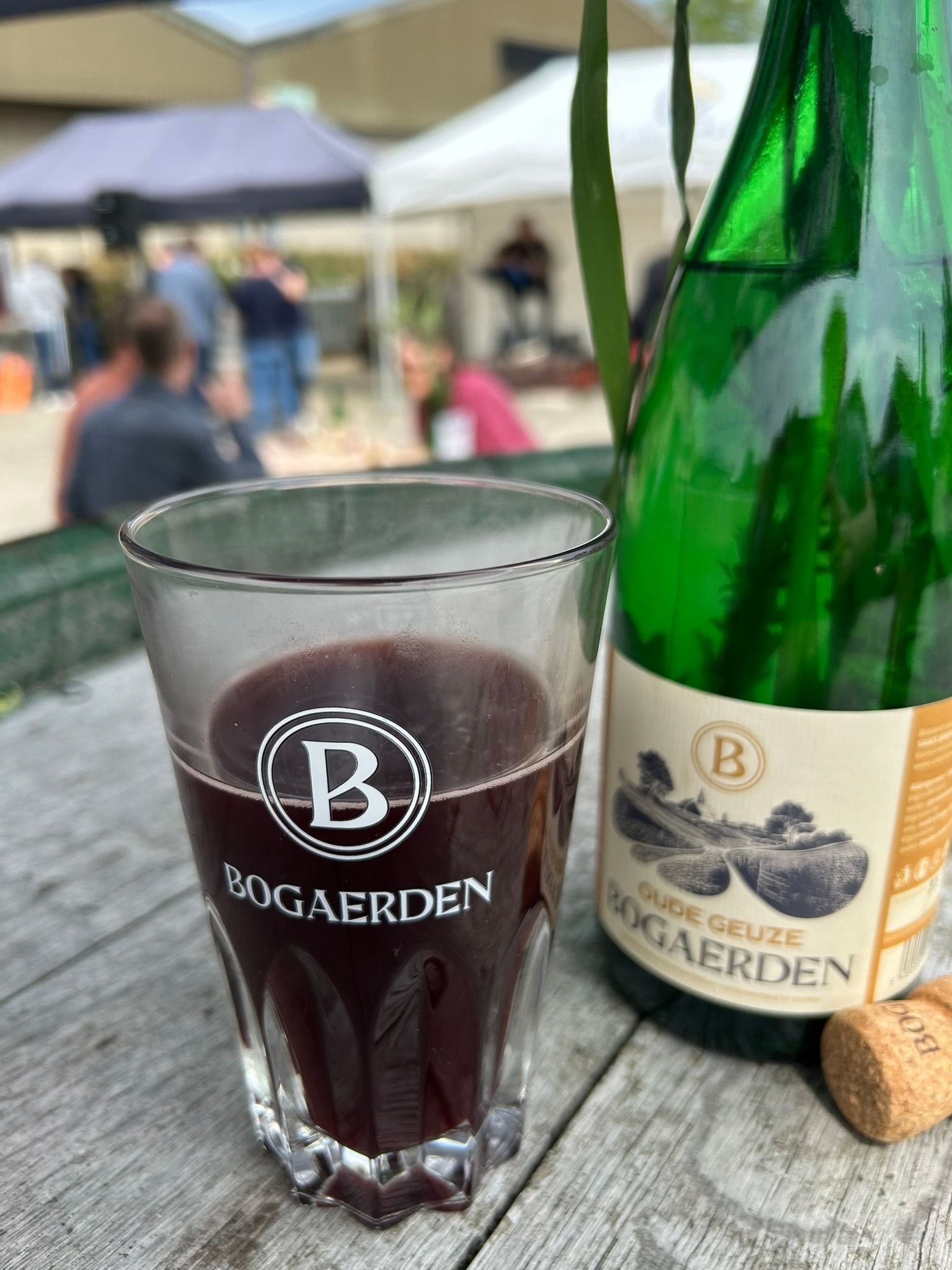
Then De Cam, the original brewery of Willem van Herreweghen. It was a pleasant courtyard, with a band cheerfully playing music. It was time for a quick infusion of food, so I enjoyed the crispy bacon on raisin bread. For whatever reason, I just didn’t fancy a beer there. So I took advantage of the fact that Sako Brewery (branded as Bogaerden) was only a few minutes stroll away through the village of Gooik. It was founded by Koen Christaens in 2018 and started brewing on that site in 2023. Willem van H, who is clearly still going strong after many decades in the industry, acted as partner and consultant. I liked the basic farmyard vibe with a bloke playing the guitar, and also very much enjoyed the “black kriek”.
We headed further north to Wambeek for De Troch. We had a long stay here, so I settled in and had a few beers. It was a pleasant interlude. By this time one beer was slightly merging into another: they would have needed to be particularly good to stand out, and I can’t remember them doing so. I tried the Megablend - a blend of lambics from across HORAL which has become one of the features of the Toer. I can see the symbolism of it and it did taste good.
Finally to Sint-Pieters-Leeuw, where the bus stopped at the large-scale Lindemans site. Again I was restless and not wanting to go where I was told, so I marched for a mile up the aptly named “Brouwerijsweg” to Kestemont. This turned into an excellent way to end the weekend. I had heard good things of Kestemont. It was in a farmhouse setting, which I happen to like. The five year old Lambic on tap was beautiful - smooth and subtle - and against my better judgement I also bought yet another bottle of special geuze from their shop.
I then marched back to Lindemans to reunite myself with the bus, and had a little time to look around. Someone had done a brilliant job preparing the site for the weekend. It was very well laid out. There were all kinds of things going on. They were promoting their alcohol-free kriek, and also a hybrid of lambic and classic top fermented ale (didn’t quite work for me). They were offering a ginger geuze, which was ok but the flavour of the ginger kind of drowned out everything else. In short, clearly a thriving business with great marketing but not quite the same slightly weird obsession with the quality of the beer that characterised some other venues. But I am aware that this is what I expected to find, so it may be my prejudice talking here.
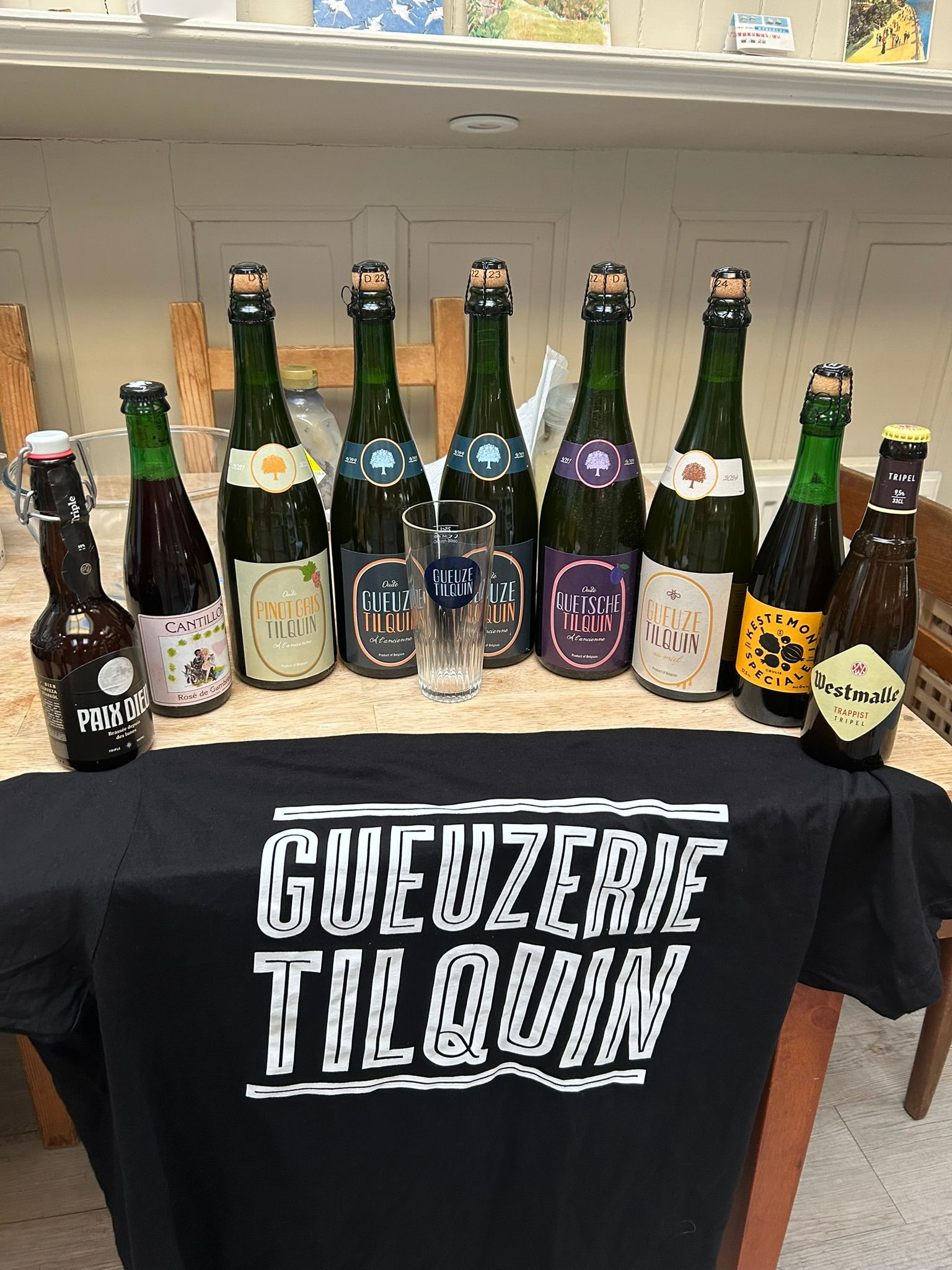
So that was it. I returned to Halle, trudged laden with beer through the streets, flaked out in my apartment, listened to VAR calmly and authoritatively resolving whether West Ham had scored against Arsenal or not, and then headed back to Brussels in the morning. My bags were groaning under the weight of bottles, so obviously no more… oh, except it would be crazy not to get a Rose de Gambrinus from Cantillon, given the absurd prices you would pay in the UK for that. And a Westmalle Tripel and a Paix Dieu from the supermarket at Gare du Midi - I mean, they were practically giving it away... And home.
Reflections
This was a great weekend. It was a genuine Belgian folk festival - the Sunday was also Mother’s Day in Belgium - that was also frequented by hardcore beer connoisseurs from around the world. The somewhat niche appeal of geuze and lambic selected the participants. I am sure that there were medieval Flemish torture instruments available had anyone asked for a “pint of lager”.
I would recommend that you go, provided that - obviously - you love lambic and geuze.
If you go, plan. In particular, plan where you are going to go and how you are going to get there. Nobody can do all the venues. I did eight plus Cantillon and 3 Fonteinen, and that was quite hard on my constitution… The buses are a good option but they book up months in advance. My day on my bike worked well, but I was incredibly lucky with the weather - the forecast about a week ago was for rain all day, which would not have been surprising for Belgium. I really liked Halle as a charming and well situated place to stay - everything stops at 1800 on Sunday, but you can easily jump on a train into Brussels if you need more beer.
Go with friends if you can. It just makes sense because you can order bottles of geuze and share them. There are organised tours - as I said, just not my thing.
So which venue was best? You have probably gathered where my preferences lie. If you are in a group and seeking a party atmosphere, I guess Boon is the place. In terms of vibe, I particularly liked Hanssens and Kestemont. In terms of obsessively amazing beer, my joint prize goes to Tilquin and 3 Fonteinen.
The next Toer will be in May 2028. I will resurrect this blog in late 2027. Until then, Proost!
Recommendations
My flat in Halle, which was positively palatial and a stunningly good bargain.
https://www.airbnb.co.uk/rooms/1395758633784928418?source_impression_id=p3_1778663842_P3nI0mqpudkw19gi
These guys supplied me with a modern and reliable e-bike with great service: www.tootoot.be
If you want to try top quality British beers inspired by geuze, this is the place - www.balancebrewing.co
Footnotes
1 - I have been a bit all over the place with the spelling up to now. The Flemings spell it “Geuze” as opposed to the Walloon “Gueuze”, and given the Flemish dominance of this type of beer I will do it their way from here
2 - in this earlier blog I followed the standard narrative that fermentation of grain was an accidental by-product of farming - i.e. the stored grain did interesting things when it got wet. I have since imbibed the compelling hypothesis of Professor Edward Slingerland (University of British Columbia) that actually our ancestors knew exactly what they were doing and indeed the making of booze was probably one of the key drivers of the development of agrarian society. His book is called “Drunk” and I would strongly recommend it.