Previously on "CAMRA Membership Weekend"
I spent Saturday 18 April in St Albans for my first visit to a CAMRA Members Weekend, having joined at the Great British Beer Festival in 2022. (See https://www.londonbiermeister.co.uk/blog/camra-chameleon )
The one thing you learn quickly when interacting with CAMRA is that there is a lot of history, and that it weighs heavily on the present day. So, as an amateur history buff from my university days, I thought I would do a bit of research.
It is fairly well known that four men - Michael Hardman, Graham Lees, Bill Mellor and Jim Makin - were drinking in a pub in Ireland in 1971 when they resolved to do something about the Bad Things that were happening to British beer. These were the interconnected Bad Things of a) industry consolidation leading to the disappearance of much loved breweries and beers and b) the growing dominance of homogenous bland beer, dispensed from kegs using carbonation and heavily promoted by advertising. The infamous “Watneys Red Barrel” was a shorthand for everything that was going wrong with the world.
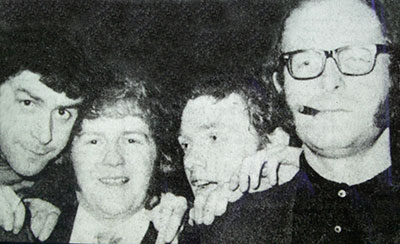
The “founding four” initially thought of a Campaign for the Revitalisation of Ale, but decided that Campaign for Real Ale would be a more effective brand (especially in terms of ease of pronunciation after several pints).
What follows is a light-hearted whistlestop tour of a few things that seem from the records to have happened at Conference over the next 55 years. It does not claim to be a comprehensive history. For example, there is nothing I can sensibly add to what others have written on the Beer Orders or Beer Duty campaign. But I am really grateful to the organisers of the Members Weekend who, shortly before, circulated a real treasure trove in the form of a spreadsheet setting out every single motion submitted to Conference, ever. I have trawled through this and used past motions to illustrate those themes which really stand out. [All long-standing CAMRA members: if you were actually there for any of these battles and want to explain / correct me on what happened, do feel free to comment]
As context, remember that I am an active supporter of CAMRA (and one who actually thinks about their direct debit each year…) When I mock, it is with affection.
CAMRA and the Big Six (or however many Big Ones there were at any given moment)
When CAMRA was formed, a lot of the anger that drove it was directed against the big breweries that had emerged from a suite of mergers and takeovers during the second half of the 20th century. Let us name the guilty parties: Allied, Bass Charrington, Courage, Scottish and Newcastle, Watney Mann and Whitbread. Early CAMRA activity is shot through with raw vitriol aimed against one or other of these companies and a determination that They Should Not Get Away With It.
Campaigns against particular actions of breweries were common. “This meeting rejects the current policies of the Courage group”, harrumphed a motion in 1980 which went on to excoriate “anti-real ale policies” and “deceptive marketing”. Watneys received a bit of tough love in 1978: “this meeting welcomes the introduction by [Watneys] of a new cask conditioned beer, but regrets the policy of dispensing it under pressure.”
Some CAMRA-ites thought bigger and urged a complete ban on TV advertising of alcohol, on the basis that this was the only means by which the ignorant population was kept in its state of false consciousness (i.e. the majority of Brits just wanted “a beer” and didn’t care whether this beer had been blessed by CAMRA).
Some thought bigger still. A motion to nationalise the Big Six was first proposed in 1978 by two members. It was defeated. In 1981, the proposers tried again, with a motion that CAMRA should think about how nationalisation might be done if the future Labour Government (ah, poor naive fools) decided to do it - obviously we are not saying that nationalisation should be CAMRA policy, but… This motion passed. Enthused, the proponents immediately slapped another motion on the table proposing CAMRA support for nationalisation. It was defeated. What might have been…
There were always mildly dissenting voices wondering whether blanket hostility was helpful, but they never quite carried the day. Eventually, in 1997, the National Executive tiptoed across the conference floor with a metaphorical Ming vase, noting that “the big brewers do produce some good quality real ales” and amending policy to support “high quality real ales regardless of which brewery produces them”.
The Big Six are now pretty much no more. But that is because they were swallowed by international lager-dominated businesses which the good folk of CAMRA do not regard with any more favour. An interesting moment took place in 2000 when Bass and Whitbread were snapped up by a Belgian outfit called Interbrew. See here (https://www.londonbiermeister.co.uk/blog/someone-s-always-playing-corporation-games ) for how that played out.
I leave the last word to a 1987 motion from the CAMRA Pubs Preservation Group that, in the light of stated Whitbread corporate strategy, any CAMRA member in a Whitbread establishment should request not a pint of bitter but “a leisure experience”. (See “Weirdness and Piss Taking”, below).
Which comes first - the Pub or the Real Ale?
An ongoing theme of discourse throughout the 55 years is precisely how stern CAMRA should be with pubs about the One True Real Ale. In the 1970s, North Manchester Branch managed to get a motion through at the second attempt which basically said “look, if a pub is really good then we should support it regardless of the real-ness (reality?) of its ale. A few years later, however, the Pub Preservation Group was excoriated by a motion for “deliberately ignoring” a previous motion that only Real Ale pubs should win CAMRA awards. If this insubordination continued, the motion continued, the National Exec should dissolve the Pub Preservation Group forthwith. (This motion was deferred to a future date)
There seems to have been a particular problem with naughty pubs dispensing Not Real Ale from Real Ale-style handpumps… a problem which never seems to have been solved. There was also a motion in 1996 condemning the proliferation of fake Irish pubs.
Drink up thy Zyder?
“Real draft cider” was embraced early on as a legitimate thing for CAMRA to support. This state of affairs has persisted, and CAMRA subsequently passed a helpful motion allowing real fruit, herbs and spices to be added to Real Cider given the increased popularity of this type of drink. However the need to keep saying “and cider (and perry)” after “Real Ale” seems to have caused irritation from some of the membership. It boiled over in 1998 with a motion from Maidstone Branch which “notes with dismay the extent to which the cider and perry lobby has become more powerful within CAMRA, causing a lack of focus on our basic aims”. It called for the cider group to be expelled forthwith. (This motion was defeated)
International Relations
The wording of a (defeated) motion from 1981 caught my eye. It begins “while recognising that countries outside the UK have brewing traditions” (you don’t say!) before going on to reaffirm CAMRA’s sole focus on traditional British brewing.
In 1990, a rather more forward looking motion hit the conference floor. The National Exec set out a textbook argument for European collaboration as a consequence of the impending Single European Market. The motion proposed liaison with other beer consumer organisations, joint lobbying and mutual defence of each others’ traditions and beer styles. Shortly after this passed, CAMRA formed the European Beer Consumers Union with its Belgian and Dutch counterparts. A couple of years later, a successful motion from Furness branch called - in the spirit of European collaboration - for a definition of “Real Lager” which could be promoted in the UK with the expectation that sister organisations would similarly promote “Real Ale”.
I do wonder how many CAMRA members voted respectively Leave or Remain. Nobody knows. CAMRA itself was neutral. There was a motion reaffirming CAMRA’s commitment to the EBCU after the Brexit vote. There was also a (fully justified, unfortunately) motion of concern about the non-tariff barriers which were likely to arise following our departure from the Single Market. There is a much longer screed that I could write about this given that I worked on it as part of my day job, but that would unbalance this blog. [Thanks to BeerNutIreland a) for correcting the title of the organisation; b) pointing out that unfortunately CAMRA is leaving the EBCU - for purely financial reasons - later this year]
Finally, the CAMRA National Exec tried a brief foray into bilateral international diplomacy. They proposed to congratulate President Havel of Czechoslovakia for preventing the take over of the Budvar Brewery by Anheuser-Busch (see https://www.londonbiermeister.co.uk/blog/someone-s-always-playing-corporation-games , again) and award him honorary membership. For some reason this motion was withdrawn. Pity.
The Curse of the Cask Breather
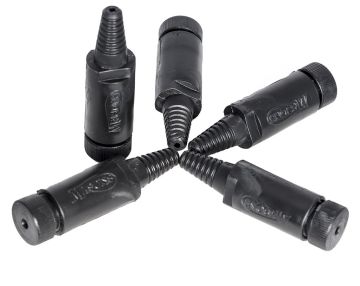
You might struggle to believe that this innocent little gizmo was the cause of such internal strife and consternation within CAMRA over the years.
“A cask breather (or cask aspirator)”, says Wikipedia, “is a type of demand valve used to serve draft beer. It enables the empty space created when beer is drawn from a cask to be filled with carbon dioxide from an external source. This prevents ambient air from being drawn into the cask, thus extending the life of the beer by preventing oxidation.”
Who could object to that? Various CAMRA members. The first outburst that I can find on this was a stentorian motion from Glasgow Branch in 1983 (the motion didn’t pass, but even so)“Those responsible for the misappropriation of CAMRA funds to pay for a four-page propaganda article on behalf of the Cask Breather system in the February edition of Branch Bulletin, shall refund to the Campaign, out of their own pockets, all costs involved in producing and distributing that article.”
Harsh… there followed a number of slightly plaintive motions (none of which passed) suggesting that CAMRA just chill a bit and allow individual branches to tolerate cask breathers if they wished. This in turn triggered the wrath of East Dorset Branch. In 1986 they raged against “the effort and resources still being wasted on the cask breather debate” and added
“Despite the two pro cask breather AGM motions being defeated, and despite the adverse effects cask breathers undoubtedly have on otherwise fine beers, some CAMRA branches and individuals still support their use. The National Executive is instructed to take immediate disciplinary measures against any CAMRA branch or individual who encourages the use of cask breathers, and to discipline any branch who knowingly includes any pub using cask breathers as entries in the Good Beer Guide or local beer guides.” (Again, didn’t pass, but wow…).
Then, in 1998, the National Exec managed to get through a motion decreeing that pubs should not be ostracised simply because there was a cask breather somewhere on the premises. (Someone countered with a motion requiring “Beware! Cask Breather!” on every offending pub pump, which didn’t pass).
Eventually the National Exec, in 2018, managed a bland motion to the effect that CAMRA “adopted a neutral position” on this particular piece of technology. This was part of the CAMRA Revitalisation Project (see below). National Director Nick Boley commented at the time that “I have been trying to work out the chemistry of why cask breathers are wrong. I can’t, and I’m still scratching my head”.
In parallel, the membership was having fun shouting about nitrogenated kegs, flash coolers and “tight sparklers” (no, me neither). All of this - see also “Key Keg” - has pretty much been resolved now with agreed CAMRA positions, but heavens it was clearly painful.
Craft and Reality
But above all, and linked to these questions of technology, the issue which has animated many a CAMRA conference is the question of what to do about the emerging trend of beers inspired by the American craft beer movement. Unquestionably delicious beers, but served from kegs.
At the beginning in 1971, “served live without carbonation in a wooden cask” was seen as an acceptable shorthand for “traditional British Real Ale” and therefore “good beer”. As always with these shorthands, some people realised that they were nuanced, while others clung to them in a “four legs good, two legs baaaaaad” sort of way. The “cask ale = real ale = good beer” line of argument was advocated with a passion which sometimes spilled over into fanaticism. Even at the time, not everyone (and that includes CAMRA supporters) was on board with it. The supportive Guardian journalist Richard Boston aimed a jibe at a subset of CAMRA members who “would drink castor oil if it was served in a wooden cask”.
I am grateful to the serious bloggers Boak and Bailey for having recorded (in a 2014 blog) a key development in the British craft beer story. I had heard of Alistair Hook spoken of as the founding father of British craft through his work at Meantime. I didn’t know that he had effectively launched a craft manifesto in 1995 in “Grist” magazine. This issue of Grist, which he edited, championed the great things that were happening in the US and lamented the role of CAMRA in discouraging innovation in Britain. The references to the “Cask Breather Hypocrisy” provides context to the Conference floor battles I have touched on above. (The below the line comments are very much worth a read) https://boakandbailey.com/2014/06/embracing-keg-rejecting-camra-1995/
The issue exploded onto the Conference floor in 2011, courtesy of CAMRA Chair Colin Valentine.
In a(n in)famous outburst, Colin declared that
“The Bloggerati are only interested in new things… the best beer they have ever had is the next one… I have a definition of craft beer… it may have hops in it but IT IS KEG! We will decide what we campaign for, not the Bloggerati, and while I have anything to do with it we will remain the Campaign for Real Ale”
A certain insurgent shit-stirring craft brewery rubbed their hands and engaged in a bit of Scot-on-Scot action. “Sadly for Colin”, replied the BrewDog blog (i.e. James Watt), “months of practising in front of his mum’s bathroom mirror didn’t pay off. Colin’s CAMRA needs an enemy, and the enemy is… anyone who doesn’t feel the need to partake in a jolly good round of beard stroking and back slapping about CAMRA’s heritage”. But forget BrewDog for a moment, I have talked too much about them already. More to the point, there were serious players in the beer world who were no less frustrated.
“Excuse my intemperate language”, wrote the late lamented Martyn Cornell, “but I’ve just been reading some total lying crap by the Chairman of CAMRA”. When he had calmed down (a bit), Martyn wrote that Valentine’s speech “doubtless delighted the tiny minority of CAMRA members who go to the AGM. But it will disappoint the many who feel that, marvellous though cask ale is, other types of artisanal brewing are available and ought to be supported as well.” https://zythophile.wordpress.com/2011/05/28/beer-bloggers-want-you-to-drink-keg-says-camra-chairman/
This debate started to be reflected in Conference motions.
A defeated motion from 2011 tried to establish Conference’s belief that whereas Real Ale has health benefits, nasty foreign stuff with additives doesn’t (although the motion "acknowledges that research on this area so far has been minimal”... evidence based policy making, anyone?)
Then a couple of motions took the dangerous word “craft” head on.
“Craft beer is beer with a distinctive flavour brewed by artisans”, successfully proposed the emollient Messrs Cryne and Spencer in 2012. “As a consequence most real ales are craft beers but not all craft beers are real ales… there are some perfectly drinkable craft beers that are not real ale and, where CAMRA is required is required to provide a full bar, consideration shall be given to keg craft beers as opposed to other keg beers”
A motion from Bradford Branch the following year tried desperately (and unsuccessfully) to row back from this, arguing that “craft” was confusing and meaningless except with reference to the “brewer’s craft” which applied to all proper brewing but mainly cask ale, and that CAMRA should never use it unless absolutely essential (and even then in inverted commas).
In 2015, CAMRA Comms and Marketing Committee tried to calm things down, proposing that “CAMRA believes in choice, and that denigrating whatever people choose to drink is counterproductive and can alienate existing and potential members. Therefore, it instructs all branches to desist from “anti campaigns” against other drinks.”
Then, finally, in 2018, we had a blandly worded motion of great significance. “This Conference instructs the National Executive to ensure CAMRA beer festivals, that choose to offer other types of beer, do so in a way that reinforces CAMRA’s belief in the superiority of real ale, and provide educational material about all beer types on sale.”
Amid the restatement of the superiority of cask, we have “choose to offer other types of beer”. This all followed the CAMRA Revitalisation project, a multi-year slow and painful accommodation with modern British brewing reality. And hey presto, CAMRA festivals do now admit the best UK craft beers (and the craft beers of big sponsors, which is a whole other story). In subsequent conferences we see the occasional brave attempt to turn the tide in a “1945 Japanese soldier” sort of way, but CAMRA has moved. Slowly, painfully, grumblingly, but nevertheless moved.
Weirdness and Piss Taking
The final thing that struck me trawling through past motions was a strong and heartening vein of eccentricity and humour. Running a CAMRA Conference has clearly always been like herding cats - I am strongly reminded of the old Liberal Party.
In 1980, SW London branch noted that these things called “microcomputers” seemed to be on the rise - clearly this could be a threat to brewing and something should be done about it.
In the same year, two members championed the importance of bar billiards against “the increasingly menacing threat from commercially motivated manufacturers of plastic foreign games”.
In 1984, it was resolved that properly maintained outside toilets are “not injurious to health” and urged local authorities to “set an example of lavatorial hygiene”
In 1986, a defeated motion deplored the “bad taste and offensiveness” in the 1985 and 1986 Good Beer Guides. I have tried in vain to get hold of copies and peruse said bad taste and offensiveness.
In a similar vein, in 1988 a successful motion “deplores the decline in the Traditional CAMRA Member and calls for urgent action at all levels for a return to traditional values”. No further information. I suddenly have a strong vision of Father Ted declaring “Down with this sort of thing”.
We have had resolutions: “that being fat is not incompatible with CAMRA membership”; taking the then Chair to task for having been sniffy about darts; requiring the National Exec to pose for a nude calendar… We have had a 220 word motion (Stafford and Stone, 1992) condemning long motions and calling for the National Exec to bring forward a motion on motion length… all of British life is here, and thank God for it.
This has been a total pleasure to research and write. My apologies to anyone who considers that I have made light of things that are serious. It was done with supportive affection.